
Photo Gallery
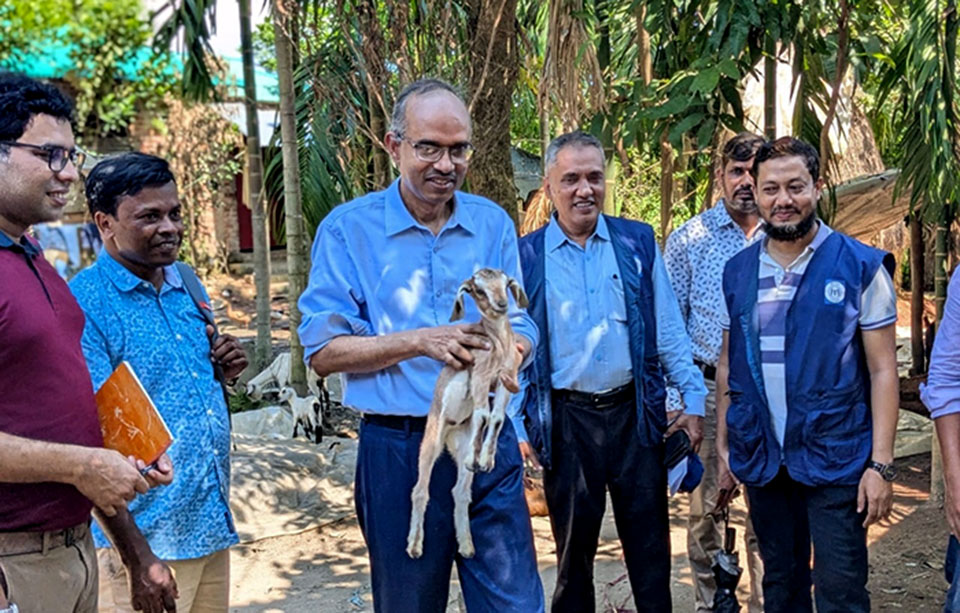
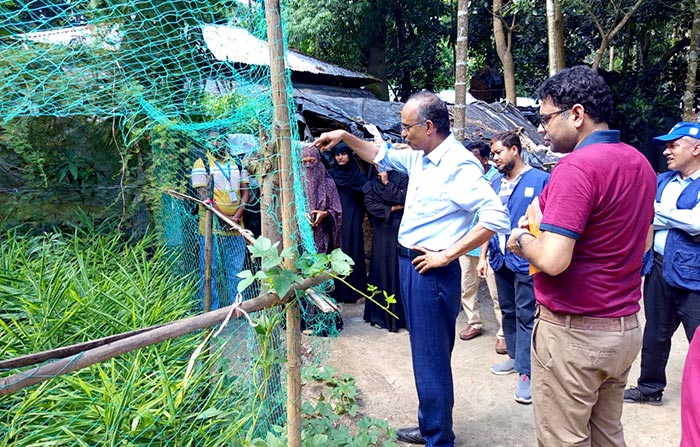
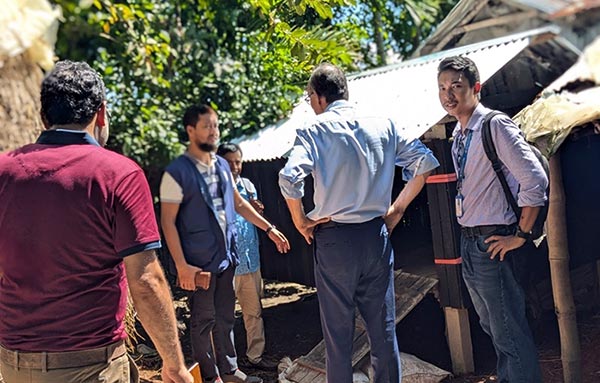
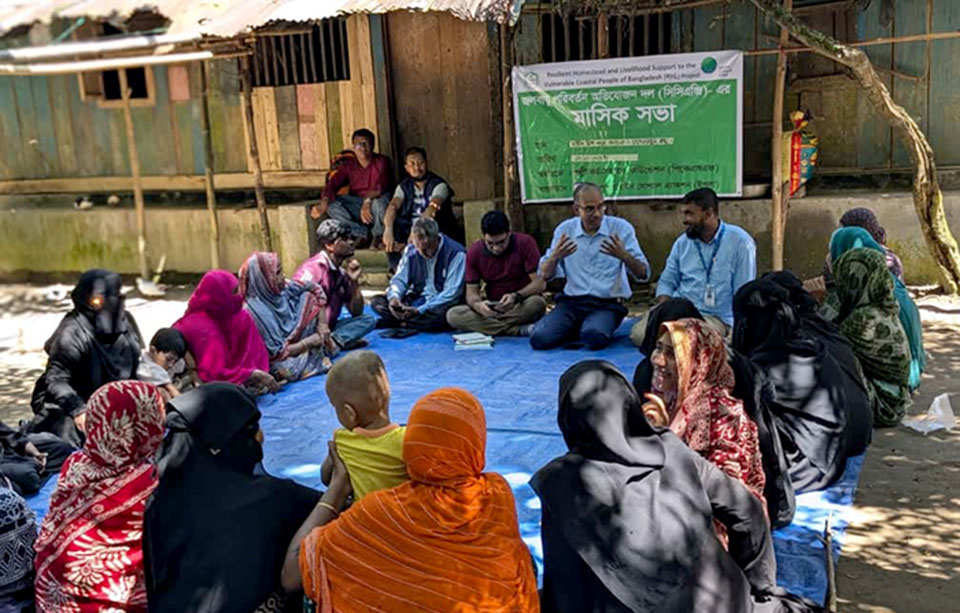
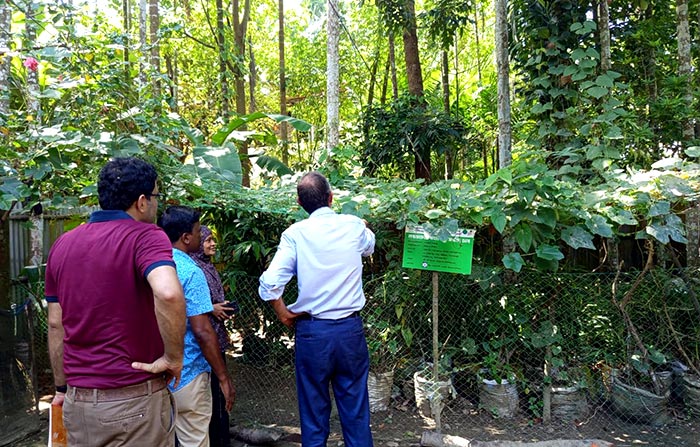
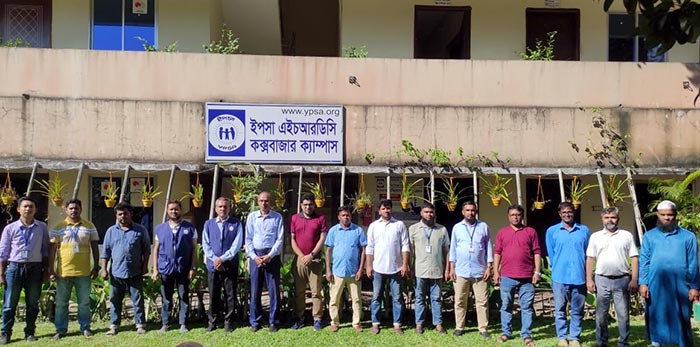
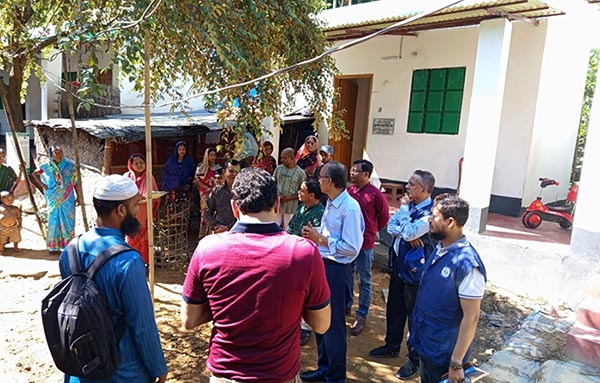
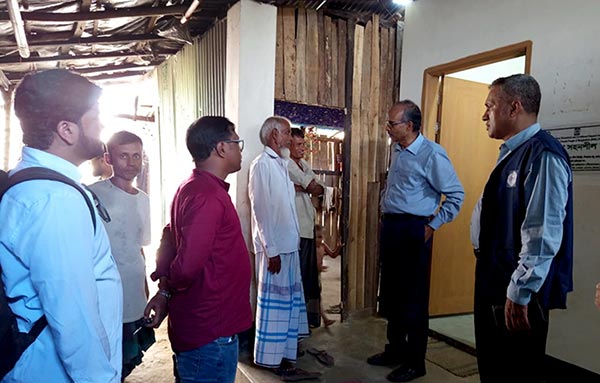
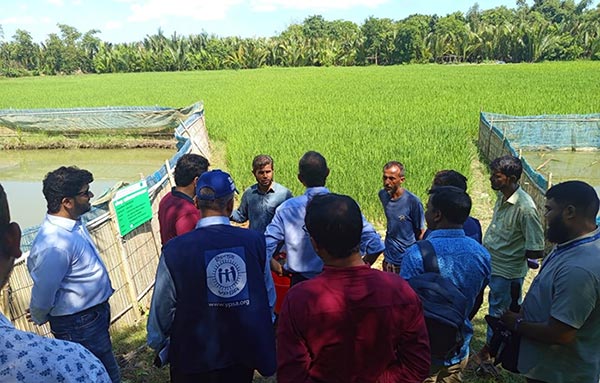
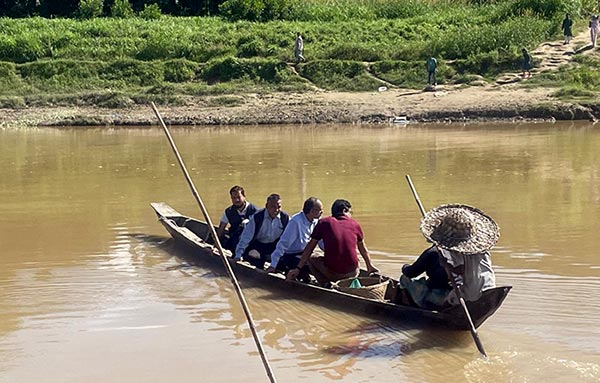
Project Title: Resilient Homestead and Livelihood Support to the Vulnerable Coastal People of Bangladesh (RHL)
Financial Support by: Green Climate Fund (GCF)
Technical Support By: PKSF
Implemented by : Young Power in Social Action (YPSA)
Duration : 06 March, 2024 to 30 August 2028
Project Background:
Bangladesh is one of the countries most vulnerable to the effects of climate change. Almost every year the country suffers from major natural disasters. The impact of climate change is having a negative impact on the daily life of the people of Bangladesh. As a result, the government is implementing various activities to address the issue of climate change with utmost importance. Few international funds have resources to address climate change. Among them, two funds- one is Green Climate Fund (GCF) and another is Adaptation Fund (AF) are playing an important role under the United Nations Framework Convention on Climate Change (UNFCCC).
The GCF was formed in 2010 by the decision of the 16th Conference of the Parties (COP). Its purpose is to financially support developing countries in mitigation of greenhouse gas emissions and adaptation to the adverse effects of climate change. Developed and developing countries have set a target of raising USD 100 Billion per year in the climate change sector from 2020. A significant portion of this money contributed by developed countries will be spent through the GCF. This money will be spent equally on both adaptation and mitigation sectors. Note that Palli Karma-Sahayak Foundation (PKSF) has been recognized as an Accredited Entity of two funds, Green Climate Fund and Adaptation Fund.
Project Brief:
Geographical Location Bangladesh’s coastal region is vulnerable to natural disasters, climate change is creating new negative impacts on coastal life and livelihoods. The coastal region of Bangladesh consists of 19 coastal districts, which comprise about 20% of the country’s total land area and more than 30% of arable land and are home to more than 35 million people, Of which more than 30% live in poverty. The average temperature of coastal areas is increasing by 0.970 °C every decade, and coastal areas are already exposed to high salinity (>5ppt). Between 1901 and 2010, sea level rose by 1.7 mm per year and from 1993 to 2010 by 2.80.8 mm per year. It is predicted to increase by 0.53 to 0.97 meters by 2100, which is higher than the global average.
Bangladesh’s coastal communities are exposed to three risks as a result of climate change:
- Climate Sensitive Livelihoods-Most residents of coastal areas depend on seasonal agriculture and agricultural wage labour, which is highly climate-sensitive. As a result of the negative effects of climate change (rise in sea level, rise in temperature, erratic rains, cyclones and floods), the livelihood opportunities of the people in the coastal areas are constantly shrinking, and the internal migration of the people is increasing.
- Vulnerable settlements in low-lying areas–Coastal dwellers live in houses made of mud and plants, which are severely damaged by cyclones, tidal waves and high tides. The lack of climate-resilient housing creates a serious poverty trap, as coastal residents spend much of their income on home repairs. And
- Lack of safe drinking water–Salinity intrusion is increasing in coastal areas due to rising sea level, resulting in acute drinking water shortages in coastal areas.
Aiming to reduce the risk to life and property of the most vulnerable communities living in the coastal areas of Bangladesh and to provide them with improved and sustainable alternative livelihoods in response to the risks of extreme climate change, the project proposal titled “Resilient Homestead and Livelihood Support to the Vulnerable Coastal People of Bangladesh (RHL)” Project of PKSF, it was approved in the GCF 36th board meeting held on July 10-13, 2023 for the implementation of GCF financing. The main objective of the project is to reduce the risk to life and property of the most vulnerable communities living in the coastal areas of Bangladesh and to provide them with improved and sustainable alternative livelihoods in response to extreme climate change risks. The project will annually and indirectly benefit approximately 362,475 people in seven coastal districts (Cox’s Bazar, Bhola, Patuakhali, Barguna, Satkhira, Bagerhat and Khulna). The total budget of the five-year project is 49.98 million US dollars, of which 42.20 million US dollars will be provided by GCF as project assistance (grant), the remaining 7.78 million US dollars as co-finance (loan) and PKSF will provide as in-kind contribution.
Project Goal and Objectives
The primary goal of the project is to develop climate adaptive coastal communities in Bangladesh through the adoption of climate-resilient livelihood options, technologies and housing. To achieve this, the project will invest in the following outcomes:
(i) decreased risk of loss of assets and lives from extreme weather events;
(ii) livelihood resilience to SLR / storm surge and salinity; and
(iii) improved climate planning and implementation by communities and local-level institutions.
The specific objectives are:
- Develop climate-resilient homesteads for marginal, vulnerable communities in the southwest coastal zone of Bangladesh.
- Develop climate-adaptive livelihoods for vulnerable coastal communities.
- Enhances knowledge and awareness of vulnerable coastal communities on climate change issues.
The project is expected to achieve the following impacts: (i) reduced vulnerability of the coastal community to the adverse impacts of climate change, and (ii) enhanced capacity of the coastal vulnerable community to address climate change issues. The expected outcomes/results are: (i) decreased risk of loss of assets and lives from extreme weather events; (ii) livelihood resilience to SLR (Sea Level Rise)/storm surge and salinity; and (iii) improved climate planning and implementation by communities and local-level institutions.
Aligning with the stated specific objectives, the project will construct climate-resilient houses for the most vulnerable households, climate-adaptive farming technologies, (e.g., crab farming along with mangrove tree plantation, sheep or goat rearing, household-based agriculture, etc.), with technical, financial, and capacity building, supply chain development and market linkage support.
The concept of a climate-resilient homesteads in the coastal areas of the country includes a raised homestead area, a cyclonic storm-resistant house structure, homestead-based vegetable cultivation, a sanitary latrine, a rainwater harvesting system and saline-tolerant fruit trees and mangrove species plantations in and around the raised homestead area. This integrated climate-resilient homestead development will protect them from coastal inundation and cyclones as well as help increase households’ income. These homesteads will also provide some safe space for livestock farming for beneficiaries.
Project Components:
The RHL project will implement the following activities to develop climate-resilient alternative livelihoods, extension of modern technology in agriculture and provision of climate-resilient housing for the development of climate-vulnerable communities in the coastal areas of Bangladesh.
Design and building of homesteads
The project will select 13,500 beneficiaries based on the selection criteria stated in Para 126, constructing 3,000 climate-proof houses. The IEs staff will carry out consultation meetings in the selected areas to select the beneficiaries. They will prepare a draft list of beneficiaries and submit it to PKSF for approval. The PMU representatives from PKSF will visit to verify the beneficiary list and provide approval for the final beneficiaries. The same process will be followed for all the activities. The core structure will be made of bricks and concrete. The house will be rectangular in shape, and the shorter edge will face the direction of the wind, which will reduce overall wind exposure. Secondly, the side of the roof with the greater slope will face the wind, and the roof will not extend beyond the wall, which will allow the wind to pass over the roof without affecting the core structure. Moreover, the roof will only be attached to the core structure and will not be supported by any walls, so even if the roof is affected, the walls will remain safe. Furthermore, there would be some gaps between the wall surface and the roof, so when the wind hits the roof, the thrust would be reduced.
Homestead tree planting
Tree plantations around the selected house are an approach to making the house resilient to the storm and tidal surge. Trees slow the wind speed of the storm, causing the least damage to the house. It will also improve the ecosystem and biodiversity of the selected areas. The project will promote planting trees around the proposed supported homesteads. Trees have the capacity to reduce the impacts of storms and tidal surges. The tree species will be selected in consultation with the local community.
The project will put emphasis on local species that are resilient to strong winds. The project will provide tree saplings (mangrove species) to the selected 20,000 HHs (90,000 beneficiaries), including 13,500 of the most vulnerable people (see outcome 3 below for selection criteria in para 122). More than 400,000 windbreak trees (or 20 saplings per HH) will be planted.
The IEs will be responsible for ensuring tree plantations. The procurement of tree saplings will be done in close consultation with the beneficiaries. The GCF grant will be used for tree plantation activities.
Construction of slatted houses for goat/sheep rearing
The RHL will support 20,000 HHs (90,000 beneficiaries) through sheep/goat rearing in slatted houses.
The IEs’ staff will be responsible for selecting the beneficiaries based on the selection criteria (Those who do not have financial capacity to purchase livestock and have capacity to rear livestock; and women-headed households and households with disadvantaged members will be given priority; poor and ultra-poor households; and have access to homestead land). They will carry out consultation meetings in the selected areas to select the beneficiaries. They will prepare a draft list of beneficiaries and submit it to PKSF for approval.
The PMU representatives from PKSF will visit to verify the beneficiary list and provide approval for the final beneficiaries. The proposed project will provide financial and technological support for improved goat and sheep management as an alternative livelihood for vulnerable farmers who do not have a sustainable year-round income. The CCAG members will arrange for the builders to construct the slatted houses. Once the houses are completed, PMU staff will visit them for quality assurance. Then the payment will be made on a master roll basis.
This activity will be carried out mainly by the female member of the selected household. This will empower them by contributing to family income and reducing their vulnerability to climate change. The slatted house and capacity building and technology part of the activity will be grant-financed from GCF and buying goat or sheep will be financed from PKSF as loans. The slatted houses will be constructed on raised areas at a height above flood level. It will be constructed with wood or bamboo, and the roof will be made with rust-protected corrugated iron sheets, which are resilient to storms and associated surges. Iron-made angles will be used to align the roof with the walls. Thus, the slatted houses will be resilient to climate change.
Provide financial support for goat/sheep rearing
Most of beneficiaries, selected for this component are poor, ultra-poor and female-headed households. They do not have enough financial capacity to purchase goats and sheep on their own. The project will provide loans for them to purchase the goats and sheep. PKSF will distribute loans among the selected beneficiaries. These beneficiaries are the same as in Activity 2.1.1.
Introduce the cultivation of saline tolerant vegetables within homestead areas: Homestead-based vegetable cultivation is important to meet nutrition demands and enhance income. However, soil salinity hampers the production of vegetables at the homestead level. There are some saline-tolerant species, such as brinjal, carrot, tomato, and cauliflower, but their threshold tolerance is less than 10 ppt salinity whereas in many areas, salinity exceeds 10 ppt, particularly during the dry season. The project will select 90,000 beneficiaries in consultation with the CCAGs for cultivating saline tolerant vegetables in the homestead areas based on criteria. The IE staff will facilitate the consultation meetings for selecting the beneficiaries. They will prepare a draft list of beneficiaries and submit it to PKSF for approval. The PMU representatives from PKSF will visit to verify
the beneficiary list and provide approval for the final beneficiaries. The project will provide technical
support as well as saline-tolerant seeds to the selected households using grant finance from GCF. This
activity is especially appropriate for women, who will be able to further contribute to their family’s nutritional intake and income through the increased capacity that they acquire through this activity.
Development of crab hatcheries (1 stage)
The proposed project will establish 50 small enterprises of micro-crab hatcheries. The IEs with guidance from PKSF and in consultation with communities will select the hatchery owners based on the criteria. The hatchery owner will be provided with training on crab breeding, hatchery management, operation, and maintenance. They will also be eligible for loans from PKSF. This loan will partly cover the construction and preliminary costs of operations. A part of the construction costs will be covered by grant funding from GCF.
The hatcheries will be established on raised areas so that they will not be flooded by tidal surges or coastal floods. Moreover, it will be semi-pucca house to make it resilient to cyclones and storm surges. Thus, the hatcheries will be more resilient to climate change. The land for the building of hatcheries and houses is owned by the beneficiaries. No public land will be used for these structures.
Financial support for producing crablets
Crab hatching technology is comparatively new in Bangladesh. The PKSF has capacity in hatchery management and in the production of juvenile crabs, or crablets. The PKSF has already established three microhatcheries as described above. The PKSF will provide technical support and loans to construct and develop the hatchery as an initial operational cost.
Technical and financial support for “crab nursers” (2 stage)
The project will engage a secondary group between hatchery owners and crab farmers. The project termed this group as “crab nursers”. The 2,250 crab collectors (50per cent of them women) will be engaged in juvenile crab rearing. The IEs’ staff will select the nurseries based on the selection criteria. The IEs staff will carry out consultation meetings in the selected areas to select the beneficiaries. They will prepare a draft list of beneficiaries and submit it to PKSF for approval. The PMU representatives from PKSF will visit to verify the beneficiary list and provide approval for the final beneficiaries.
Technical and financial support to “crab farmers” (3 stage)
The project will select 90,000 tertiary level crab farmers (50per cent women) to produce export-qualitycrab (both hard shell and soft shell). The IEs staff will carry out consultation meetings in the selected areas to select the beneficiaries. They will prepare a draft list of beneficiaries and submit it to PKSF for approval based on the selection criteria stated in paragraph 125. The PMU representatives from PKSF will visit to verify the beneficiary list and provide approval for the final beneficiaries. They will be provided with the necessary training and financial support. They will buy juvenile crabs from the nurseries and rear them for 30 to 40 days before marketing them. The financial instruments used will be both loans and grants. PKSF will provide the loan for purchasing juvenile crabs from hatcheries, while GCF grants will be used to purchase materials and logistics for preparing ghers or ponds.
Target Beneficiaries:
PKSF will implement RHL project activities through it’s partner organizations/ Implement Entity’s with the targeted beneficiaries mentioned under the activities mentioned below.
| Name of Project Activities | Number of Targeted Beneficiaries |
| Construction climate resilient coast housing | 3,000 climate-proof houses will be constructed |
| Homestead tree plantation | 400,000 windbreak trees (or 20 saplings per HH) will be planted |
| Construction of slatted houses for goat/sheep rearing | 20,000 HHs (90,000 beneficiaries) will be supported through sheep/goat rearing
in slatted houses |
| Introduce the cultivation of saline tolerant vegetables within homestead areas | 20,000 beneficiary HH will cultivate saline-tolerant vegetables |
| Development of crab hatcheries (1 stage) | Establish 50 micro crab hatcheries |
| Technical and financial support for “crab nursers” (2 stage) | A least 500 entrepreneurs will engage in crab nursery |
| Provide technical and financial support to crab farmers (3 stage)s | 20,000 beneficiary households |
- Selection Criteria:
The project will support 362,475 people through a set of selection and eligibility criteria as well as close consultation with local government institutions and community. Available government data will be used to identify the poor and extreme poor in the project area. Direct beneficiaries will be selected based on eligibility and selection criteria. The selection criteria, which are listed below, will be complemented with additional criteria in case of the number of interested and eligible households exceed the target numbers.
- Those who live in saline-prone coastal vulnerable areas;
- Priority to women-headed households and other disadvantaged groups;
- Poor and ultra-poor households (as defined in the Household Income and Expenditure Survey
- Per capita daily income is less than USD 1.90 adjusted with PPP as an alternative criterion of HIES’s definition of poverty;
- Those who are not receiving any support from other projects or organizations;
- Those who have salinity-affected land particularly away from agricultural land;
- Interested in participation in the project and adoption of the project-promoted technologies and practices; and
- Willing to contribute to the project through loan, cash and in-kind contributions, as necessary.
Selection criteria for goat/sheep rearing in slatted houses (Activity 2.1.1)
- Those who do not have financial capacity to purchase livestock and have capacity to rear livestock;
- Women-headed households and households with disadvantaged members will be given priority;
- Poor and Ultra-poor Households (as defined in the Household Income and Expenditure Survey
- Have access to homestead land
The selection will be based on the order of the selection criteria from amongst the targeted households in the project area. When the selection process reaches 90,000 beneficiaries, it will be stopped.
Selection criteria for homestead tree plantation and saline tolerant vegetable cultivation (Activity 1.1.2 and Activity 2.1.3)
- Poor and ultra-poor people
- Having homestead land of at least 60 square meters
- Women headed households and physically challenged people will be given preference.
The project will select 90,000 beneficiaries for tree plantations and 90,000 beneficiaries for saline-tolerant vegetable cultivation.
Selection criteria for crab hatchery establishment (Activity 2.2.1)
- Those who have the financial capacity to set up a crab hatchery through their own initiative;
- Minimum or good educational and technological knowledge on crab or shrimp hatcheries;
- Previous experience with microenterprise operations;
- Capacity to hire land means financial capacity of the beneficiary to have rent land.
- A minimum of 20 decimals of owned land, but not adjacent to agricultural land to set up a crab hatchery in a small scale;
Only barren and fallow land will be considered to set up a hatchery plant, so there will be no chance of losing productive land. The selection will be based on the order of the selection criteria from amongst the targeted households in the project area. When the selection process reaches 225 beneficiaries, it will be stopped.
Selection criteria for crab nursers and farmers (Activity 2.2.3 and Activity 2.2.4)
- Having cultivable land or capacity to rent 55 at least 0.20 hectare;
- Women-headed households and households with disadvantaged members will be given priority;
- Have the ability to run an manage crab farming activities;
- Poor and ultra poor households (as defined in the Household Income and Expenditure Survey
Selection criteria for a resilient homestead (Activity 1.1.1)
- Those who have their own homestead area at or above tidal flood level with high exposure to climate shock events;
- Women-headed households and households with disadvantaged members will be given priority;
- Poor and ultra poor households (as defined in the Household Income and Expenditure Survey and
- Those who do not have financial capacity to construct resilient houses.
The selection will be based on the order of the selection criteria from among the targeted households in the project area. When the selection process reaches 13,500 beneficiaries, it will be stopped.
Working Area:
To develop a climate-adaptive coastal community in Bangladesh by adopting above mentioned climate-resilient housing and livelihood technologies, the Green Climate Fund (GCF) approved “Resilient Homestead and Livelihood Support to the Vulnerable Coastal People of Bangladesh (RHL)” a five-year project, in 36th GCF Board on July 14, 2023. Seven exposed coastal districts: Satkhira, Khulna, Bagerhat, Barguna, Patuakhali, Bhola, and Cox’s Bazar.
Total 20 upazila under seven districts are the working area of RHL project. The total area of these seven districts is 24,691 sq. km and the total population is 12,275,996. The average poverty rate is 26.13 percent, which is higher than the national average of 24.3 percent. There is a strong demand for climate-proof houses in the coastal areas. The ”Palli Karma-Shayak Foundation (PKSF)” will implement the project, a Direct Access Entity (DAE) of GCF and Young Power in Social Action (YPSA) is implementing entity (IE). YPSA as a partner/IE of PKSF will implement RHL project in four Unions (Khuniapalong, South Mithachari, Chakmarkul and Fathekharkul) of Ramu Upazila, Cox’s Bazar District whcih are most vulnerable coastal area to climate change.
Workshop proceedings:
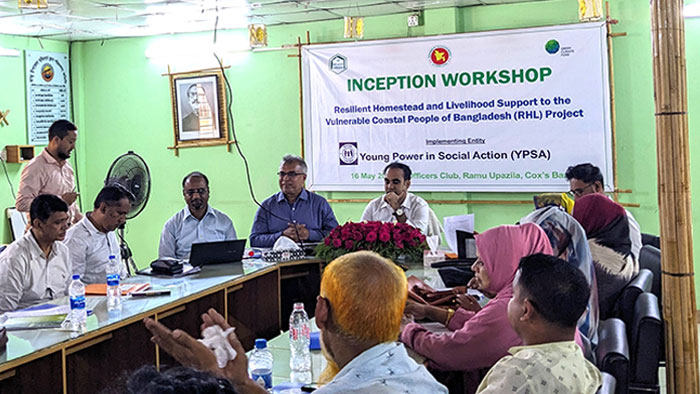
The Inception Workshop started with an introduction of facilitator with the participants, which was followed by every individual participant then introducing himself/herself by mentioning their name, designation, organization etc. To create an enabling environment for workshop facilitator made this session interactive, and participants able to understand the significance of rapport building. Moreover, this process helps the participants to get a shared understanding of a safe place. Mr. Mohammad Harun, Focal Person- YPSA, Cox’s Bazar, conducted/facilitated the inception meeting.
At the end of the introductory session, Mr. Mohammed Shahidull Islam, Assistant Director and Head of Rohingya Response Program, YPSA gave a welcome speech at the event.
Then Mr. Mohammad Shahjahan, Director, YPSA presented the main article and project introduction in the said inception meeting. He said, under this project climate change resilient houses will be constructed/reconstructed/ settlement raised, Crab hatchery/nursery will be set up and climate change tolerant crabs will be farmed, Goat/sheep rearing will be carried out under loft/macha system, Salinity tolerant vegetables will be grown in the homestead of the residence and trees will be planted in the homestead and mangrove afforestation in the crab hatchery enclosure. The project will directly and indirectly benefit approximately 362,475 vulnerable people/household in seven coastal districts (Cox’s Bazar, Bhola, Patuakhali, Barguna, Satkhira, Bagerhat and Khulna).
In this stage of inception workshop, chief guest, honorable Mr. Md. Rashedul Islam, Upazila Nirbahi Officer (UNO), Ramu, said that it is possible to improve the quality of life of the vulnerable and helpless people through this project. The project is very much in line with government plans and policies to address the adverse effects of climate change. Upazila administration and all government departments related to the project will provide necessary support to this project.
YPSA’s Chief Executive said, the RHL project will play an important role in improving the quality of life of coastal communities and making them more resilient to climate change. We are committed to working closely with the government, local communities and others stockholders to successfully implement this project.
Among others spoke at the meeting, the meeting was addressed among others by Mr. Sushanta Deb Nath, Upazila Agriculture Extension Officer, Ramu, Mr. Faruq Hossain, Marine Fisheries Officer, Upazila Fisheries Office, Ramu, Mr. Shahadat Karim, SALO, Upazila Livestock Office, Ramu, Mr. Al Galib, Upazila Social Service Officer, Ramu, Union Parishad Chairman, Women UP member, Crab hatchery owner, representatives of various NGO’s and organizations of Fatekharkul, South Mithachari, Khunia Palang and Chakmarkul Union and journalist, local public representatives and elite persons.
Speakers in the meeting said that if the RHL project is properly implemented, the quality of life of the people of the Upazila will improve. In the meeting, the project manager discussed in detail about the RHL project. At the end of the meeting, honorable Chief Executive and Director, YPSA answered everyone’s questions and gave detailed information about the future programs under the project.
Participants Expectation:
The following expectations were expressed by the participants in the Inception Workshop which organized by YPSA-RHL project.
Chief guest, honorable Mr. Md. Rashedul Islam, Upazila Nirbahi Officer (UNO), Ramu, said that it is possible to improve the quality of life of the vulnerable and helpless people through this project. The project is very much in line with government plans and policies to address the adverse effects of climate change.
YPSA’s Chief Executive said, the RHL project will play an important role in improving the quality of life of coastal communities and making them more resilient to climate change. We are committed to working closely with the government, local communities and others stockholders to successfully implement in this project.
In the Inception Workshop, the Upazila Social Service Officer Mr. Hosne Mobarak said that if the RHL project is implemented properly, the people of the coastal areas of Ramu Upazila will be able to improve the quality of life by dealing with the risks of climate change.
The Upazila Agriculture Extension Officer Mr. Sushantha Deb Nath said that the planned activities of the project are timely and far-reaching to deal with climate change risks, so the upazila agriculture office will provide all kinds of technical support for the successful implementation of this project.
The UP Chairman of South Mithachari Union expressed the opinion that if UP members are involved in all the work of the project, the implementation of the project will be easier and they will extend their hand of cooperation in all the work of the project. And she also said informing everyone about the project activities by holding workshops at the union level like upazila, then everyone can will help the project with information and necessaery support.
Khuniyapalong UP Chairman said – In addition to the specific work of the project, Repairing or rebuilding of roads, infrastructure, dams damaged in the past due to climate change will benefit the people of the coastal areas and ensure the successful implementation of the project. He assured all kind of cooperation in all works of the project.
- Recommendations:
All the recommendations were expressed by the participants in the Inception Workshop are mentioned below which organized by YPSA-RHL project.
Chief guest, honorable Mr. Md. Rashedul Islam, Upazila Nirbahi Officer (UNO), Ramu, said Upazila administration and all the government departments concerned with the project will provide full cooperation in the successful implementation of the project and selection of the right beneficiaries.
YPSA’s Chief Executive Mr. Arifur Rahman- said, we are committed to working closely with the government, local communities and others stockholders to successfully implement this project.
The Upazila fisheries officer Mr. Faruq Hossain, Ramu- said that if the fishermen of the coastal area can be more involved in such a project, the goal of the project will be achived, because they live in the coastal area and depend on the sea for their livelihood, so they are the most affected by climate-related risks.
The Upazila Agriculture Extension Officer Mr. Sushantha Deb Nath said-Close monitoring of all involved in the project from top to field level will lead to successful implementation of project objectives.
The UP Chairman of South Mithachari Union said that those affected by the flood and breach of the Bakkhali river should be given priority assistance.
The owner of the hatchery present in the Inception Workshop said that for the establishment of hatchery and nursery of crabs, skills and competent entrepreneurs should be selected, only then the goals and objectives of the project will be achieved. And to be supervised by full time technical person.
The representative of the NGO (Red Cricent) said that if materials are given instead of cash for the implementation of the project, its proper use will be ensured and the successful implementation of the project will be possible.
Conclusion:
All those present at the meeting said that RHL is a timely project to address the risks of climate change and improve the quality of life of the poor communities in the coastal areas. They also said that if the RHL project is implemented properly, the quality of life of the people of the upazila will improve and they will be able to face the threat of climate change. In the meeting, the speakers discussed in detail about the RHL project, gave opinions and suggestions, gave instructions about the implementation strategy. At the end of the meeting Chief Executive, YPSA answered all the questions and gave detailed information about the future program under the project.
And at the end of the meeting, the president thanked and thanked everyone present and announced the end of the meeting.