
A national seminar organized by the Sasakawa Peace Foundation (SPF) in collaboration with Young Power in Social Action (YPSA) today presented new research findings emphasizing that structural vulnerabilities and psychosocial stress significantly influence perceptions of security among Rohingya refugees living in camps in Bangladesh.
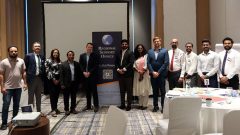
The seminar titled “From Vulnerability to Resilience: Assessing Security Risks and the Role of Livelihoods in Rohingya Camps” was held at the InterContinental Hotel in Dhaka on 15 March 2026 and brought together policymakers, researchers, humanitarian actors, and development practitioners to discuss the evolving security and livelihood dynamics within the Rohingya refugee camps.

Bangladesh currently hosts over one million Rohingya refugees, most of whom reside in camps in Cox’s Bazar, with a smaller number relocated to Bhasan Char. As the crisis continues into a protracted phase, experts increasingly emphasize the need to better understand the social, economic, and psychological conditions that influence stability and resilience within the camps.
The research presented at the seminar was conducted by an international team of scholars from institutions including the Sasakawa Peace Foundation, the Australian National University, Indiana University, Queen’s University Belfast, and the University of Chittagong. The study was implemented in partnership with YPSA and covered Rohingya camps in Ukhiya and Teknaf in Cox’s Bazar as well as the relocation site in Bhasan Char.
This study combined large-scale survey data with extensive qualitative fieldwork to understand how structural conditions and psychosocial experiences shape perceptions of security in displacement settings. The quantitative survey included responses from more than 2,000 Rohingya refugees across multiple camp locations.


Dr Emadul Islam, Senior Research Fellow from Sasakawa Peace Foundation, Japan and Dr Mohammad Zainuddin, Australian National University presented the research study findings. The study found that structural exclusion such as limited opportunities for income generation, restricted mobility, and limited participation in decision-making processes significantly increases perceptions of insecurity among refugees. These structural conditions also contribute to higher levels of psychological distress and weakened social cohesion within communities.
According to the research, psychological stress and reduced trust among community members act as important pathways through which structural vulnerabilities translate into feelings of insecurity. When these psychosocial factors were taken into account, the direct influence of structural exclusion on insecurity perceptions decreased significantly, highlighting the complex relationship between social conditions and perceived safety.

Another key finding of the study suggests that participation in existing livelihood programs does not significantly reduce the relationship between structural exclusion and perceived insecurity. Researchers emphasized that while livelihood initiatives are valued by refugees, their current scale and economic impact may be too limited to meaningfully transform everyday living conditions within the camps.
Qualitative interviews conducted with refugees and community leaders further highlighted several pressing challenges faced by camp residents, including uncertainty about the future, limited employment opportunities, and psychological stress associated with prolonged displacement. Youth vulnerability, gender-related protection concerns, and tensions surrounding resource distribution were also identified as important issues affecting camp stability.


Speakers at the seminar emphasized that addressing insecurity in refugee camps requires a holistic approach that considers both material conditions and psychosocial well-being. Expanding meaningful livelihood opportunities, strengthening community cohesion, and improving access to education and psychosocial support services were identified as key areas for policy attention.
Ms Nobuko Kayashima, Executive Director of SPF and as a chief guest for the first session, Mr. Asad Alam Siam, Foreign Secretary, Ministry of Foreign Affairs, People Republic of Bangladesh stressed on finding the impactful solutions for the Rohingyas as a top priority.

In the closing remark of the first session of the seminar, Dr Md. Arifur Rahman, Founder and Chief Executive, YPSA reiterated that “We need to make investment in youth, provide psychosocial support and meaningful economic participation for individual dignity in Rohingya camps and YPSA as a Bangladeshi local organization remains committed to this cause.” He also thanks all for taking time to actively participate in this important event which also portrays the commitment of everyone on Rohingya issues to find solutions.


In the second session, a high level panel discussion on security challenges and durable solutions to the Rohingya crisis took place where the panelists include Dr. Khalid Koser, Executive Director, GCERF, Dr Niaz Ahmed Khan, Vice-Chancellor, University of Dhaka, Dr Shahab Enam Khan, Professor Jahangirnagar University, Rear Admiral Md. Khurshed Alam, Director, CBoBS, IUB, Mr Ivo Freijsen, UNHCR, country representative of Bangladesh, Mr Naoki Takahashi, Minister and the Deputy Chief of Mission, Japan Embassy to Bangladesh followed by an open discussion.
In the chief guest remark of the second session, Dr Rashed Al Mahmud Titumir, Adviser to the Prime Minister of Bangladesh pointed about sustainable repatriation. In his speech he mentioned that, “We are committed to extending our relationships and engagement with our neighboring countries, including ASEAN, South Asian countries, as well as other nations, to resolve the crisis and achieve a durable solution through the safe, voluntary, dignified, and sustainable repatriation of Rohingya refugees to their homeland. Let us work together towards ensuring their return to their homeland.”

The seminar also featured remarks from policymakers and humanitarian stakeholders, including representatives from the Government of Bangladesh and international organizations working on the Rohingya response. Other high-level participants include, Mr Mohammed Mizanur Rahman, Commissioner Refugee Relief and Repatriation Commissioner (RRRC) at Cox’s Bazar, Mr Tomohide Ichiguchi, Chief Representative, JICA Bangladesh, Dr. Hasan Reza, Associate Professor, Indiana University, USA, Dr Nasir Uddin, Professor, University of Chittagong, Bangladesh, Dr Abu Bakar Siddiqui, Royal University, Dhaka. The importance of continued international cooperation to ensure sustainable humanitarian support while pursuing long-term solutions, including repatriation were emphasized in this event.