
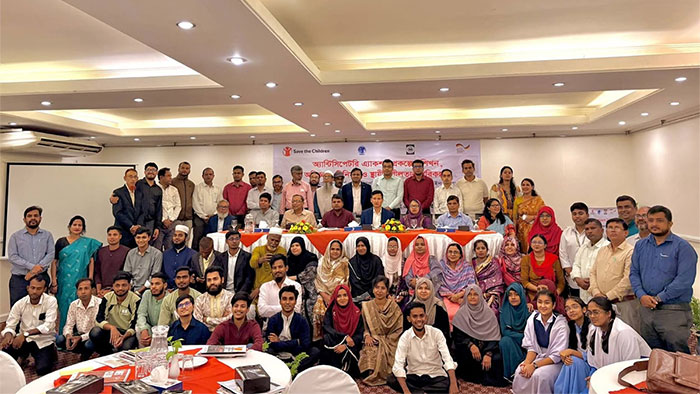
Joint efforts among local institutions, government and non-government organizations, and communities are essential to strengthen local capacity for anticipatory actions. Speakers made these remarks at a workshop held at Hotel Agrabad in Chattogram, on 22 November. Organized by YPSA, with funding from the German Federal Foreign Office (GFFO) and support from Save the Children, the event focused on sharing experiences, reviewing achievements, and planning the future sustainability of the three-year project titled “Child-Centered Anticipatory Action for Better Preparedness of Communities and Local Institutions in Northern and Coastal Areas of Bangladesh.”
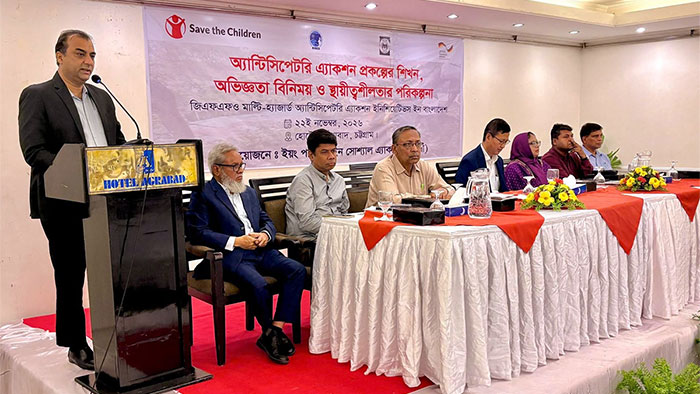
Mohammad Ashraful Amin, Chief Executive Officer of Chattogram City Corporation, attended the workshop as the Chief Guest. In his speech, he praised the ‘Met Club’ initiative for raising awareness about weather and climate, stating, “Met Club is a very effective initiative. We should expand this initiative across the country.” He commended the active role of young people in disaster management and highlighted the contributions of students from the University of Chittagong and the Chittagong University of Engineering and Technology (CUET).
Meanwhile, sharing field-level experiences, speakers noted that a lack of effective coordination and formal coordination structures or councils among stakeholders often creates barriers to implementing plans and continuing project activities. They stressed the need to strengthen local coordination and ensure clear roles and accountability among relevant institutions.
Moderated by YPSA Project Officer Muhammad Ataul Hakim, the event was attended by several Special Guests: Afru Marma, Deputy Director of the Department of Agricultural Extension (Chattogram); Ruhul Amin, Upazila Nirbahi Officer of Banshkhali; Dr. Iqbal Sarwar, Professor of Geography and Environmental Studies at the University of Chittagong; Engineer Delowar Mazumder, President of the Committee of Concerned Citizens (SANAK); Abdur Rahman Khan, Deputy Director of the Bangladesh Meteorological Department; Nazrul Islam, Deputy Director of the Cyclone Preparedness Programme (CPP); Salma Begum, District Fisheries Officer of Chattogram; and Nasim Banu, Director (Social Development) at YPSA. At the start of the event, Project Manager Sanjida Akter presented an overview of the project’s activities.
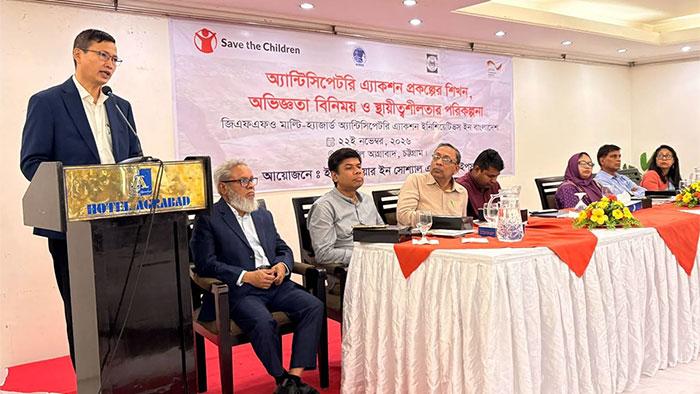
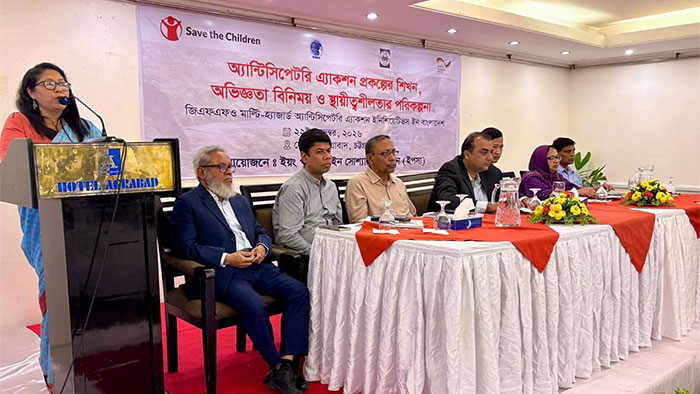
Other invited guests included District Veterinary Officer Dr. Md. Shahabuddin; Banshkhali Upazila Agriculture Officer Shyamal Sarker; Sadhanpur Union Parishad Chairman A K M Salauddin Kamal; CUET Assistant Professor Shahjalal Mishuk; Hossain Ahmed City Corporation School and College Principal S M Ahsanul Haque; Firojshah City Corporation Girls’ High School Head Teacher Saiful Islam; Water Development Board Sub-Divisional Engineer Imran Hasan; Banigram Sadhanpur High School Head Teacher A.K.M. Main Uddin; Chattogram Metropolitan Project Implementation Officer (PIO) Md. Kamrul Hossain; and Divisional Forest Officer (Chattogram North Zone) Md. Rashidul Islam, among others.
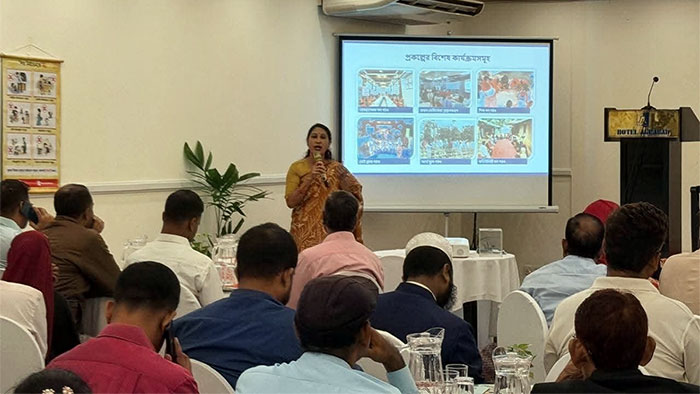
The workshop brought together representatives from government and non-government organizations, disaster management committee members, volunteers, teachers, children and youth representatives, farmers, women entrepreneurs, and community members. Participants reviewed the project’s three-year implementation experience, key achievements, challenges, and lessons learned. They also discussed ways to continue community-based initiatives developed and strengthened under the project such as Met Clubs, Farm Schools for farmers, Youth Hubs, the Interpreter Pool, and volunteer networks after the project ends.
Participants divided into six representative groups: multi-sector stakeholders, disaster management committees, volunteers and the interpreter pool, Met Clubs and child representatives, beneficiaries and community groups, and small women entrepreneurs for group discussions. The groups recommended establishing local ownership of the initiatives, keeping volunteers actively engaged, promoting knowledge sharing among farmers, building leadership among children and youth, and ensuring the continuity of women entrepreneurs’ businesses.
The talks focused on having teachers lead the Met Clubs, helping farmers keep sharing lessons through Farm Schools, keeping young people involved through Youth Hubs, and helping disaster management committees and volunteers work closer together. In the closing session, participants outlined stakeholder roles and responsibilities, ways to improve local coordination, and future action plans and commitments to keep the initiatives sustainable after the project concludes.