
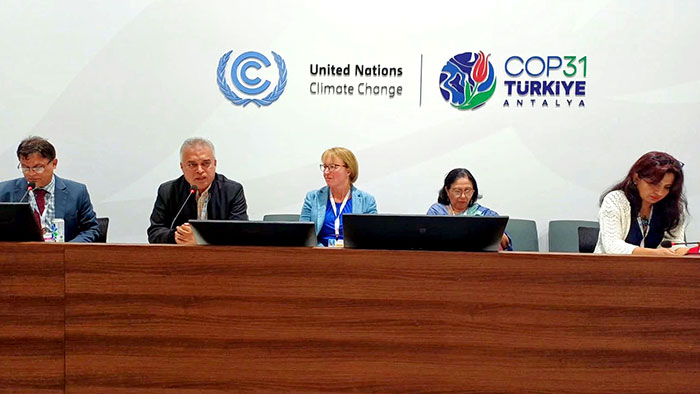
YPSA and the discussants have called for stronger integration of climate mobility into global climate policies, increased Loss and Damage financing, and locally led action to ensure durable, rights-based solutions for people displaced by climate change. The call was made at a COP31 side event held on 16 November, in Antalya, Türkiye, highlighting the urgent need to address the growing challenges faced by climate-displaced communities, particularly women, young people, persons with disabilities and other marginalised groups.
YPSA organised the side event titled “Climate Mobility and Loss & Damage: Policy, Finance and Locally Led Action” in Side Event Room 7 (Hasankeyf), in collaboration with Coastal Development Partnership (CDP) and Manusher Jonno Foundation (MJF) as co-hosts. Shaheen Anam, Executive Director of MJF, moderated the session.
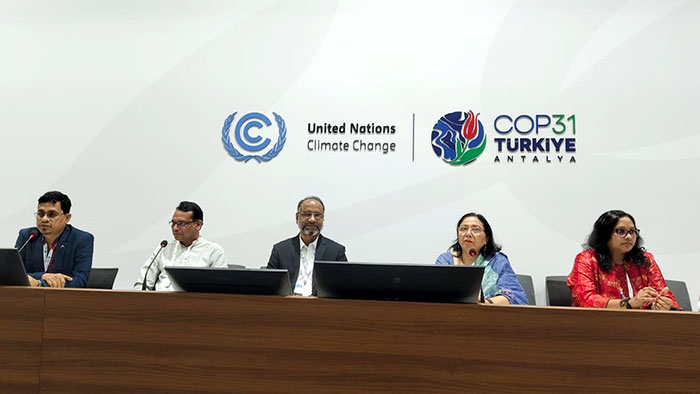
The panel featured Shirin Sultana, Programme Manager at the Embassy of Switzerland; Dharitri Kumar Sarkar, Joint Secretary at the Ministry of Environment, Forest and Climate Change, Bangladesh; Farhana Afroz, Programme Director, Climate Action at Local Level (CALL) Programme, Heather McGray, Director of the Climate Justice Resilience Fund; Dr. Md. Arifur Rahman, Founder and Chief Executive of YPSA; and Mohammad Shahjahan, Director of YPSA;
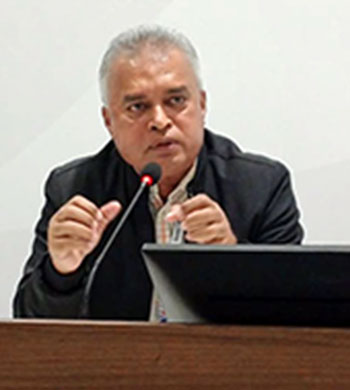 Highlighting the challenges faced by climate-displaced communities, Dr. Md. Arifur Rahman emphasised that displacement brings multiple layers of loss and suffering, affecting people both in the places they leave behind and in their new destinations.
“Working with displaced people, we have seen how they suffer both in the place they are displaced from and in the place they come to. The suffering at the destination is greater, as they have to deal with a different environment and get involved in informal work. We need to work on their skills to make them confident,” he said.
Responding to a question about how affected communities, particularly women, young people, persons with disabilities and marginalised groups, can meaningfully influence decisions that shape their lives, Dr. Rahman stressed the importance of building their capacities, strengthening livelihood opportunities and ensuring their active participation in decision-making processes.
Sharing YPSA’s practical experience in supporting climate-displaced families, Mohammad Shahjahan highlighted the organisation’s initiatives to help displaced households access safe shelter and rebuild sustainable livelihoods. He emphasised the importance of evidence-based planning, rights-based approaches and adequate financing to ensure that climate-displaced people receive long-term support rather than temporary assistance.
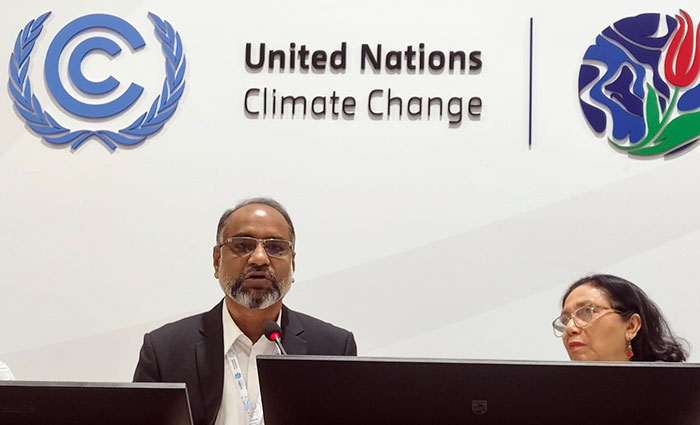
He further underscored the need to recognise the multiple dimensions of Loss and Damage associated with climate-induced displacement, including the loss of homes, income, livelihoods, social networks and community connections.
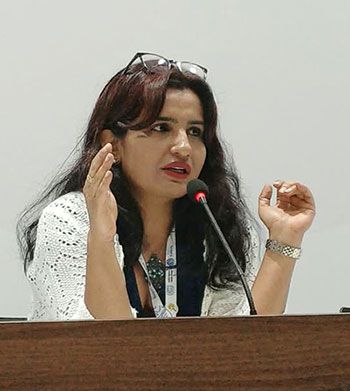 Addressing the challenges of climate finance and resource mobilisation, Shirin Sultana acknowledged that many development partners are increasingly stepping back from the sector, making collaboration and efficient resource utilisation more important than ever.
“We all know the reality. But this is also the time to show how efficiently we can use the resources and how we can work together,” she said.
She encouraged stakeholders to strengthen partnerships with governments, the private sector and local organisations while developing a pipeline of viable projects to mobilise resources for communities severely affected by the climate crisis.
Highlighting Bangladesh’s policy response to climate-induced displacement, Dharitri Kumar Sarkar, Joint Secretary at the Ministry of Environment, Forest and Climate Change, outlined the country’s progress in developing policy frameworks to address internal displacement.
“Bangladesh has taken significant steps to address climate-induced displacement through dedicated policy frameworks. The Ministry of Disaster Management and Relief developed the National Strategy on Internal Displacement Management in 2021 and its Action Plan in 2022. Climate mobility is also being integrated into the National Adaptation Plan and Nationally Determined Contributions (NDCs),” he said.
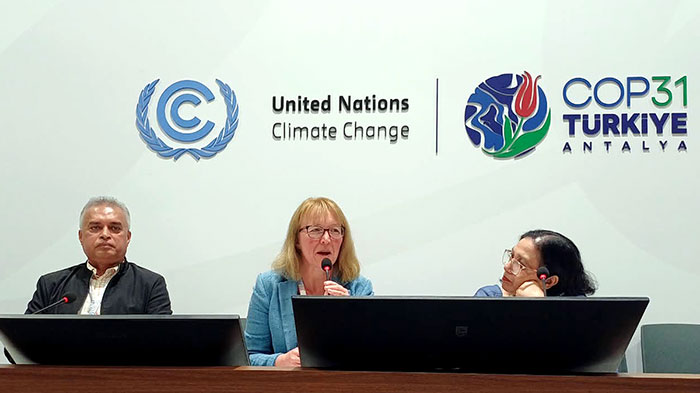
Heather McGray, Director of the Climate Justice Resilience Fund, also shared perspectives on climate justice and the importance of strengthening locally led approaches to address the challenges of climate mobility and Loss and Damage.
The overall discussion emphasised that climate mobility must be recognised as an integral component of climate adaptation, disaster risk reduction, development planning and the global response to Loss and Damage. Participants highlighted that climate-induced displacement is not simply a matter of moving people from one location to another; it involves complex economic, social, environmental and human rights challenges that require comprehensive and long-term responses.
The session also highlighted a significant gap between the needs of climate-affected communities and their access to climate finance and decision-making processes. Although local communities are often best positioned to identify their risks, vulnerabilities and priorities, they frequently lack the resources and institutional opportunities to influence policies and access financial support directly.
The event brought together government representatives, climate negotiators, financial institutions, philanthropic organisations, researchers, civil society organisations, and youth and women’s networks, providing a platform for sharing experiences, exchanging policy perspectives and exploring opportunities for collective action.