
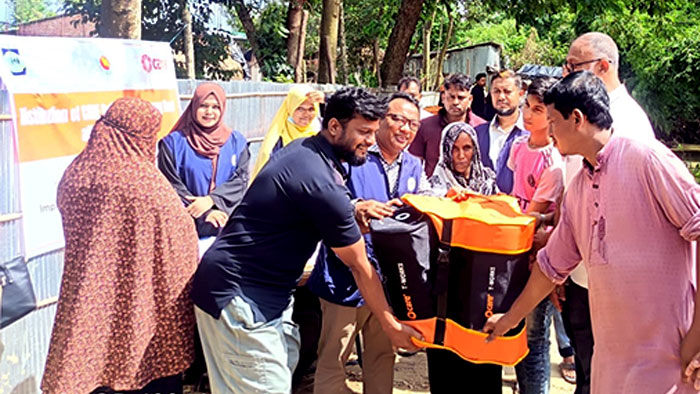
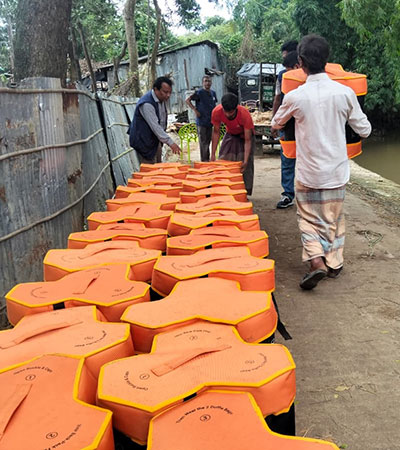
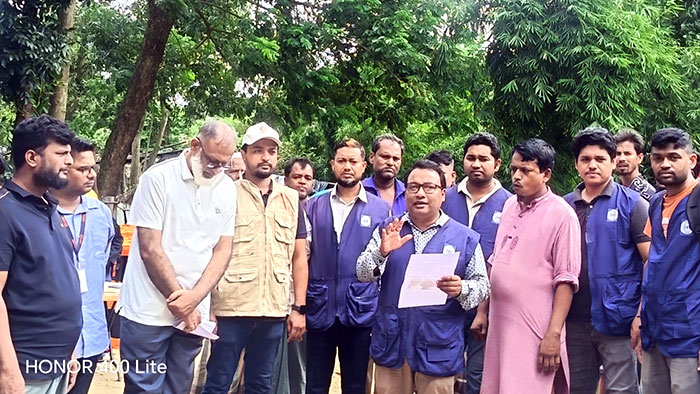
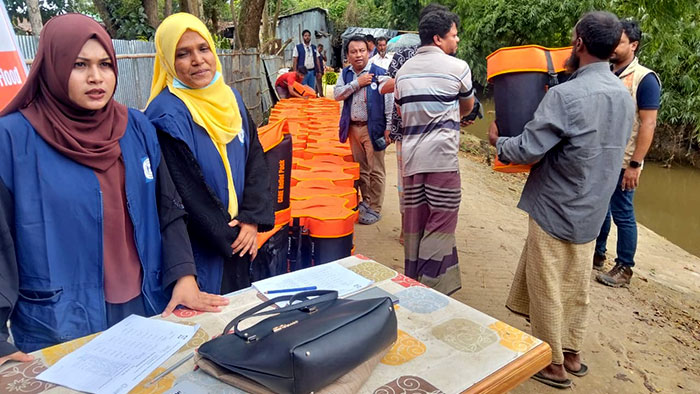
YPSA, in association with CARE Bangladesh, has stood by the flood-affected people of Chakaria, Cox’s Bazar. On 15th July 2026, YPSA distributed relief packages to 200 people affected by the recent heavy monsoon floods in Boroitoli and Kaiarbil Unions of Chakaria, under the Cox’s Bazar district.
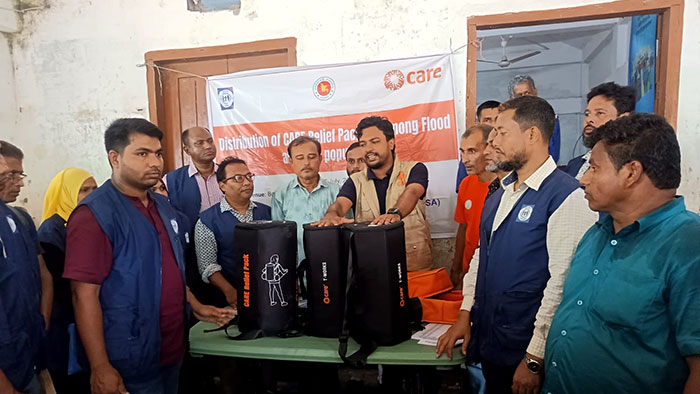
 Representatives from CARE Bangladesh, Union Parishad, and YPSA attended the relief distribution program. CARE Bangladesh was represented by Mr. Shohel Mahmud, Senior Team Leader, and Mr. Farooq Rahman, Senior Program Manager. The YPSA team included Mr. Jishu Barua, Assistant Director (R. Response Program Coordination); Mr. Md. Harun, Program Manager and Focal Person, Cox’s Bazar; Mr. Enayet Mowla, Finance Manager; Mr. Abidur Rahman, Program Officer-DRR and Livelihood; and Mr. Md. Farhad Uddin, Upazila Manager-DRR and ERD.
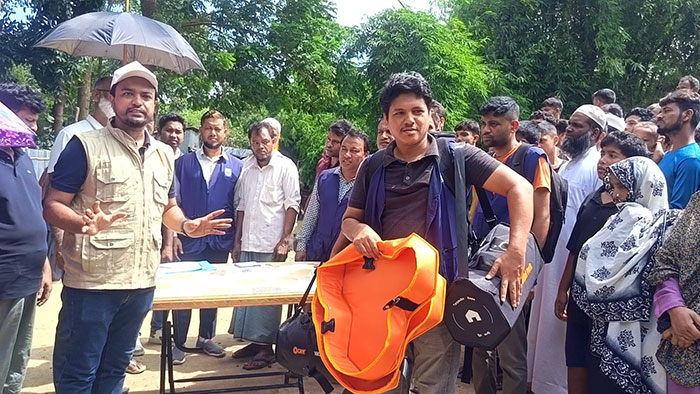
Preparation and Coordination: Under leadership of the YPSA Central Disaster Management Focal, the YPSA Cox’s Bazar Response Team coordinated with the Chakaria Upazila Office for the distribution of the relief materials. The YPSA team received overall support from the offices of UNO and union parishad to select the affected area and beneficiaries for the distribution.
Beneficiary Selection Criteria: Beneficiaries were selected based on the following vulnerability criteria:
- Households directly affected by flooding.
- Ultra-poor households.
- Households with Persons with Disabilities.
- Households with pregnant and lactating women.
- Households facing extreme socio-economic vulnerability.
Items of Relief Package:
CARE Relief Pack consists of 39 different items under the following five categories:
| Category | Number of items | Name of Items |
|---|---|---|
| Hygiene kits | 16 items | Menstrual Pad, Sanitary cotton pads, Undergarments, Clothesline string, small clips, Dish wash soap, Body wash soap, Toothpaste, Toothbrush, Match box, Lighter, Comb, Hair oil, Nail cutter and Garbage roll |
| Kitchen kit | 10 items | Cooking stove, cooking pot with lid, cooking pan with lid, ladle, plates, glasses, spoons, vessel holders’ cloth, kitchen knife, utensil scrub |
| Water kit | 5 items | Collapsible water bucket, pre-filter cloth for bucket, Folding Jerry can, Funnel, NADDC tabs |
| Solar kit | 1 item | Solar light with charger cable |
| Shelter kit | 2 items | Tarpaulins and Ropes |
| Associated items | 5 items | 2 types of instruction leaflets, A4 documents folder, Waterproof Poly cover and Relief kit bags |
OVERVIEW OF AFFECTS BY FLOOD AND EMEGENCY NEEDS:
Cox’s Bazar under Chattogram Division has experienced exceptionally heavy monsoon rainfall, resulting in widespread flash flooding, severe waterlogging, river overflows, and landslides across both urban and rural areas, and Rohingya refugee camps. Heavy rainfall and runoff from upstream hills have inundated different upazilas of Cox’s Bazar since Sunday (July 5, 2026), leaving thousands of families stranded. There are 10 upazilas in Cox’s Bazar, including Cox’s Bazar Sadar, Chakaria, Matamuhuri, Ukhiya, Teknaf, Ramu, Maheshkhali, Kutubdia, Pekua and Eidgaon. Of them, the worst‑hit areas are Chakaria, Pekua, Ramu and Matamuhuri, Maheshkhali, Ramu, Ukhiya and Teknaf, where local representatives estimate nearly 200,000 people remain stranded. Thousands of residents in parts of Eidgaon, Ramu and Cox’s Bazar Sadar are also marooned. Between 5th July and 12th July, 2026, relentless monsoon rains have triggered deadly landslides across the Cox’s Bazar district, killing at least 19 people, including 13 Rohingya refugees and eight hurt.
Although flood water started receding, the sufferings of the affected people have not ended. They have lost their belongings. A brief account on loss and damage is as follows;
Infrastructure Damage: Numerous houses, schools, madrasa, cattle house and health centers have been damaged or destroyed. Roads and bridges were fully and partially damaged, making many areas inaccessible for relief operations.
Agricultural Losses: Extensive damage have been reported in rice fields, salt field, and vegetable gardens, which are crucial for local food security. The loss of livestock and fisheries has further worsened the situation for affected families.
Overall Comments: The affected community needs huge rehabilitation support. No significant assistance has reached to the flood affected areas.