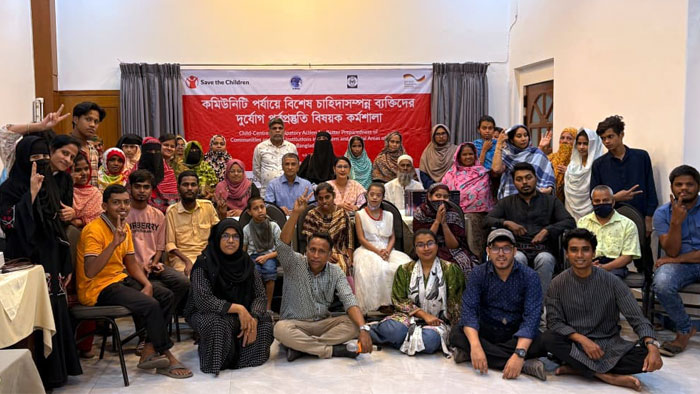
Two community-level workshops on disaster preparedness for persons with disabilities were organized in Chattogram city and Banshkhali upazila under the “Anticipatory Action” project implemented by Young Power in Social Action (YPSA). The project is funded by the German Federal Foreign Office (GFFO) and supported by Save the Children. The project seeks to shift from a reactive disaster response approach to a proactive and anticipatory model, encouraging communities to take preventive measures before a disaster occurs rather than responding afterward.
The city-level workshop was held on March 2 at Pitstop Restaurant in Lalkhan Bazar. A good number of persons with disabilities from landslide-prone wards under Chattogram City Corporation took part in the event, including Ward 14 Lalkhan Bazar, Ward 9 North Pahartali, Ward 8 Shulakbahar and Ward 7 West Sholoshohor.
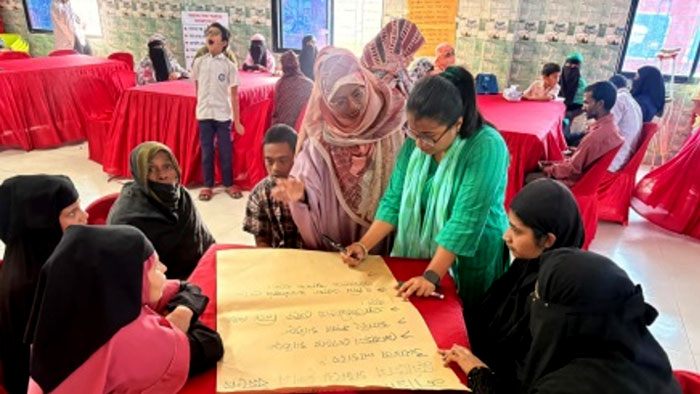
Another workshop was held earlier on February 26 at the Seven Star Convention Hall in Chechuria of Banshkhali upazila. Persons with special needs from Pukuria, Sadhanpur, Kalipur and Bailchhari areas participated in the program.
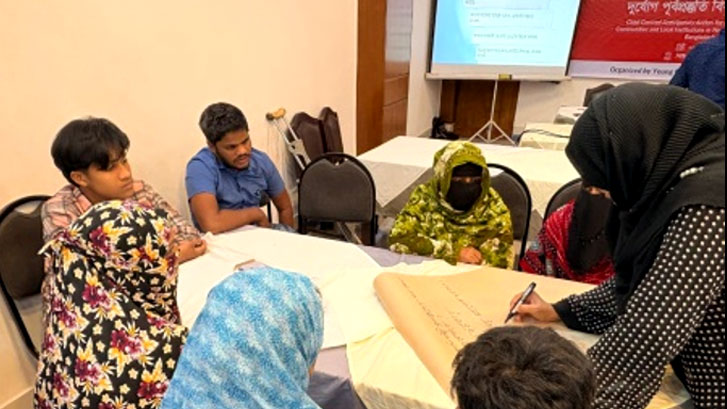
A total of 80 participants attended the two workshops, with 40 participants in each session. Among them, 20 were persons with disabilities along with their guardians in each workshop.
The training sessions were conducted by YPSA’s Assistant Director Newaz Mahmud, and sign language instructor Kohinur Akther from the Department of Social Services. YPSA’s Project Manager and disaster focal point Sanzida Akter provided overall guidance on the program. The primary objective of the workshop was to ensure that marginalized populations, particularly people with disabilities, are adequately included in disaster preparedness and risk reduction initiatives.
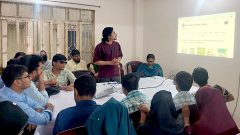
In his presentation, Newaz Mahmud emphasized the importance of inclusive disaster planning. He stated that preparedness efforts must be comprehensive and participatory so that no individual is excluded due to physical or intellectual limitations. He discussed various types of disabilities, including physical, visual, speech and hearing, and intellectual disabilities, noting that each category presents distinct challenges during emergencies and therefore requires tailored preparedness strategies.
As part of the workshop, he conducted team-based group work session. A total of 40 participants were divided into four groups and assigned different tasks. They discussed how early warning messages could be communicated in ways that are understandable to persons with different types of disabilities, enabling them to take advance preparations. Participants also explored how families and communities can provide effective support during emergencies.
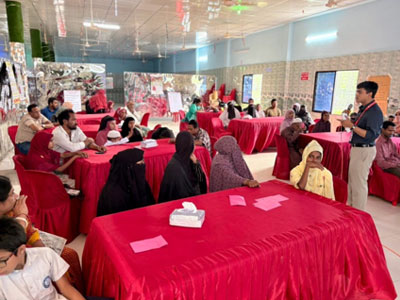
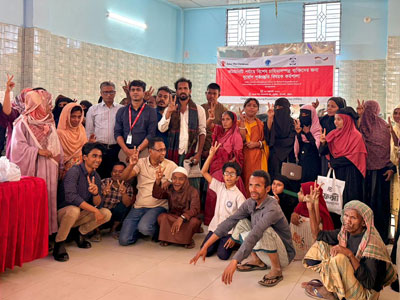
Moreover, Newaz Mahmud demonstrated practical methods for delivering early warning messages in accessible formats for persons with disabilities and their caregivers. He underscored that effective communication, timely dissemination of information, and prior preparedness are critical to minimizing risk and safeguarding lives.
During the session, Kohinur Akther stated that persons with disabilities should not be hidden from society, should not be labeled simply as “disabled,” and must be addressed by their names. She shared her personal experience as the mother of a speech-impaired daughter, describing her child as a source of strength and blessing in her life. Throughout the workshop, she used sign language to ensure that participants with speech and hearing impairments could actively engage in the discussions.
Speaking at the program, Sanzida Akter said inclusive planning is essential to reduce disaster risks. She said if preparedness measures are designed by considering the abilities and needs of persons with disabilities, it is possible to significantly reduce loss of life and damage. She also noted that coordinated community initiatives and participatory planning are key to building sustainable disaster management systems.
She added that anticipatory action is not just a project but a mindset. According to her, it means preparing before a possible disaster occurs, identifying risks in advance, and ensuring the protection of the most vulnerable groups.
Officials from Save the Children and YPSA were also present at both workshops. Among them were Save the Children officer Farabi Akash, YPSA’s project officer Mahinoor Akter, assistant project officers Muhammad Syade Minhazul Islam, Keya Bilkis, Nasrin Begum, Muhammad Enamul Islam, Belayet Hossain. The Banshkhali workshop was facilitated by YPSA official and development worker Kalyan Barua, while the Chattogram City workshop was moderated by Muhammad Ataul Hakim and S.M. Shahriar Alam.
During the training, participants received practical, hands-on instruction on pre-disaster preparedness measures, including identifying precautionary steps, saving emergency contact numbers, developing family-based safety plans, ensuring safe transportation, storing food and essential supplies, administering basic first aid, and strategies for rapid evacuation to secure locations. These exercises provided participants with real-world experience in taking timely and effective action upon receiving disaster warnings.
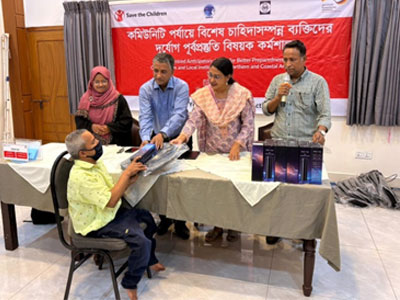
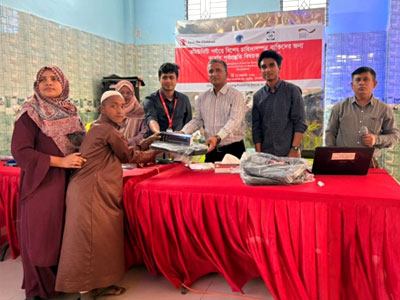
The workshops concluded with the distribution of essential gift items to the participating persons with disabilities.