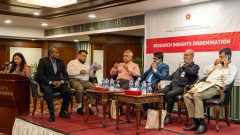
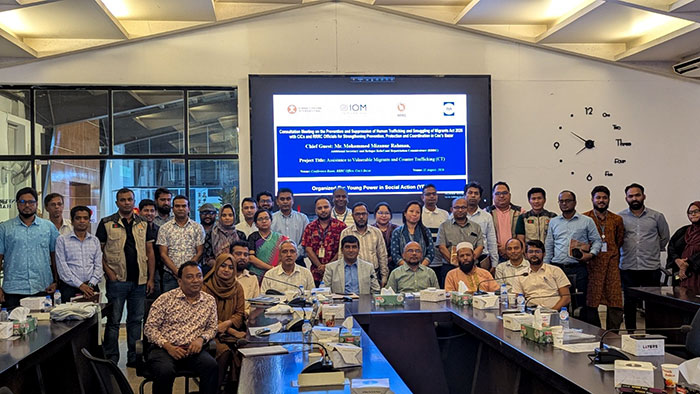
“It is quite natural for Rohingyas living in the camps to feel desperate, as they have lost what they had in their country. The government is doing everything possible to support them until they can be repatriated to Myanmar. However, some perpetrators are taking advantage of their vulnerability and trafficking them for exploitation. We must resist and prevent the efforts of these perpetrators. In this regard, an integrated effort involving government agencies, camp administration, development partners, and other relevant stakeholders is necessary.” Said Mr. Mohammad Mizanur Rahman, Refugee Relief and Repatriation Commissioner (RRRC) in the Consultation meeting organized by Young Power in Social Action (YPSA) on 11 August 2026 at the Conference Room of the RRRC Office, Cox’s Bazar.
The event titled “Consultation Meeting on the Prevention and Suppression of Human Trafficking and Smuggling of Migrants Act 2026 with Camp-in-Charges (CiCs) and RRRC Officials for Strengthening Prevention, Protection and Coordination in Cox’s Bazar” was attended by the Camp-in-Charges (CiCs) of all 33 Rohingya refugee camps in Cox’s Bazar.
The core objective of the consultation meeting was to scale up collaboration in prevention of human trafficking, ensure protection of the victims of trafficking and smuggling, and resource mobilization for the reintegration assistance for the people exploited through human trafficking and smuggling.
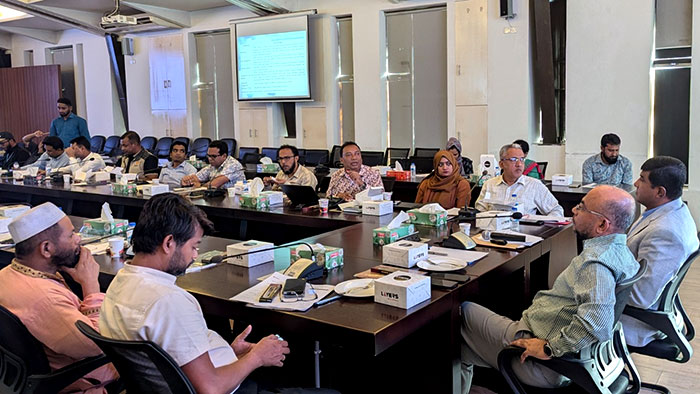
At the onset of the program, Mr. Jishu Barua, Assistant Director and Counter Trafficking Focal of YPSA presented an overall situation of human trafficking and smuggling in the Rohingya camps in Cox’s Bazar. He also gave a presentation on the ongoing activities of YPSA under its project titled “Assistance to Vulnerable Migrants and Counter Trafficking (CT)” be implemented in association with International Organization for Migration (IOM) in the Rohingya and host communities since June 2018.
A delegate of IOM led by Ms. Sara Sadiya Israt, Counter Trafficking, Field Coordinator, Protection Unit, IOM, Cox´s Bazar attended the consultation meeting. In her greeting speech, she emphasized on the collaboration of all the stakeholders to join hands to counter human trafficking and smuggling.
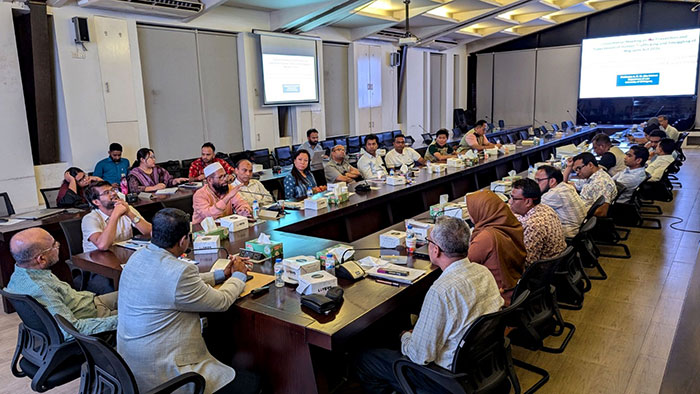
In his welcome speech, Mr. Mohammed Shahidull Islam, Deputy Director and Regional Head, Cox’s Bazar, YPSA shared the overall humanitarian activities that YPSA has been doing in the Rohingya camps since August 2017.
Mr. Nazmul Islam Bhuiyan, Additional Refugee Relief and Repatriation Commissioner (Deputy Secretary) said that victims are always in fear, even in the safe centers, as they know that the perpetrators live in the same areas and they can commit harms to their family members as well, if they disclose their names and file case against them. He added that we must take measures to protect the victims and their families as well.
In the Consultation Meeting, Mr. A. B. M. Abu Noman, Professor Department of Law, University of Chittagong served as key facilitator. He provided an overview of the Prevention and Suppression of Human Trafficking and Smuggling of Migrants Act 2026. Notably, the government of Bangladesh made the law in 2026. However, his facilitation covered the Existing Legal Framework on Human Trafficking and Migrant Smuggling in Bangladesh: A Focus on the Prevention and Suppression of Human Trafficking and Smuggling of Migrants Act, 2026 Coordinating Prevention and Protection: The Role of CiCs and RRRC Officials in Safeguarding Rohingya Victims of Trafficking and Smuggling.
At the end of the event, Mr. Mohammad Mizanur Rahman, remarked that the consultation meeting was a timely event for us all. It is because for the first time, we have got an overall understanding of this new human trafficking and smuggling act that the government has made.
A team from the YPSA Assistance to Vulnerable Migrants and Counter Trafficking (CT) Project attended the consultation meeting. The team included Mr. Shuvra Adhikari, Ms. Shanuching Marma, and Mr. Tanim Rahman Mitu, Project Officers; Ms. Turfa Azam, Technical Officer; and Mr. Ahasnul Karim, Logistic Officer.
A BRIEF NOTE ON THE PROJECT
Project Title: Assistance to Vulnerable Migrants and Counter Trafficking (CT)
Project Objective: To reduce vulnerability and enhance protection for victims of trafficking among Rohingya refugees in Cox’s Bazar through improved awareness, identification, case management, and referral systems.
Project Start Date: 1 June 2018
Project Location/Working Area: Host and Rohingya communities in Cox’s Bazar
Supported By: International Organization for Migration (IOM)
KEY ACTIVITY COMPONENTS:
| Component | Key Activities |
| Prevention | YPSA conducts a range of community-based awareness activities, including courtyard meetings, comic strips sessions, child Awareness sessions, public discussion & debate, puppet shows, video animation shows, and community drama, to raise awareness on human trafficking and smuggling. |
| Case Management | YPSA maintains a structured case management system to identify victims of trafficking and provide them with direct support, as well as facilitates access to services through effective referral mechanisms. |
| Capacity Building | YPSA organizes and facilitate training sessions, orientations, and workshops to strengthen participants’ knowledge and skills on prevention of counter-trafficking & smuggling, and victim-centered services. |
| Engagement with Duty Bearers | YPSA arranges meetings with key duty bearers, including Camp-in-Charges, law enforcement agencies (LEAs), protection actors, and Counter-Trafficking Committees (CTC), Legal Practitioners to enhance coordination, support prevention efforts, and ensure appropriate assistance and reintegration support for victims. |
| Community Engagement | Youth, volunteers, leaders and IMAM in community-based activities |
| Advocacy & Policy | Strengthening implementation of relevant laws and policies |
| Monitoring & Learning | Documentation, monitoring and evidence-based learning |