
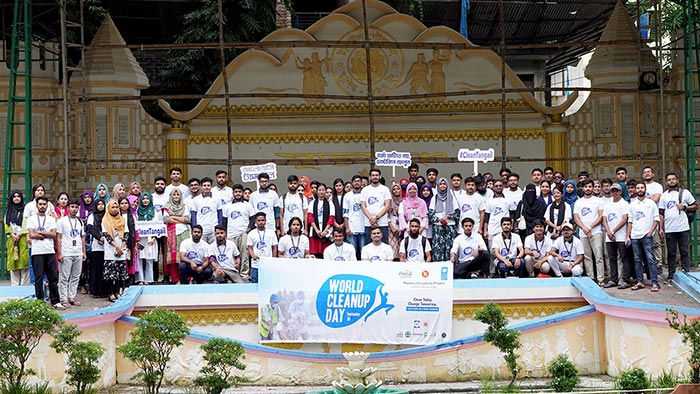
Young people in Tangail have taken the lead in community-based environmental activities as part of World Cleanup Day 2026, turning cleanup efforts into hands-on practices for reducing plastic waste and promoting responsible waste management.
UNDP Bangladesh, with support from The Coca-Cola Foundation (TCCF), is implementing the Plastics Circularity Project (PCP) to strengthen plastic waste recovery, segregation and recycling systems and advance a circular economy across three cities. The project is governed by the Local Government Division (LGD) and locally implemented by YPSA.
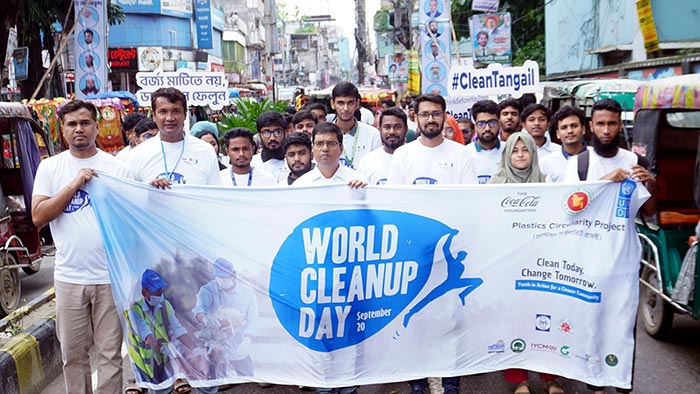
The initiative was organized from 13 to 19 September 2026 in Tangail city. Volunteer for Bangladesh (VBD), Helping Hand Foundation, Green Club, Internation Youth Change Maker (IYCM)-Tangail, Batighor Adarsho Pathagar, Biodiversity Conservation Club (BCC) selected six youth organizations and clubs of Tangail carried out a range of activities involving local communities, students, young people, businesses and other stakeholders.
Moving beyond traditional one-day cleanup activities, the initiative focused on encouraging practical and lasting changes in how communities manage their daily waste including plastic waste. Activities included cleanup and plastic collection drives, waste segregation practices, awareness campaigns, engagement with local businesses and communities, promotion of alternatives to single-use plastic, public pledges, creative activities and social media campaigns.
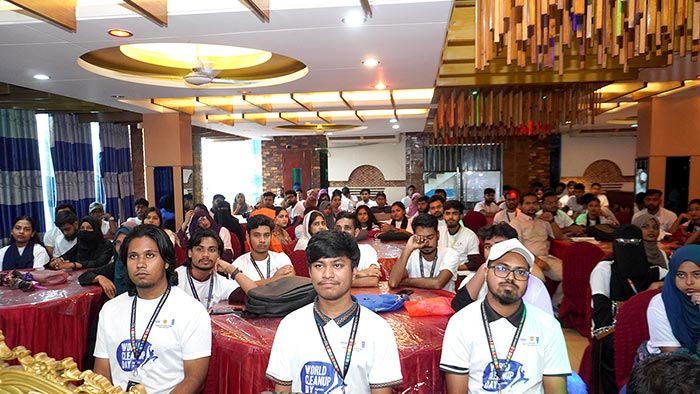
The initiative carried the message “Clean Today, Change Tomorrow – Youth in Action for a Cleaner Community,” emphasizing that environmental action should go beyond cleaning public spaces and contribute to changes in everyday behavior and community practices.
Youth organizations also worked to engage local businesses, government representatives and community stakeholders. Creative activities, including painting and youth-led campaigns, helped encourage wider participation and make environmental messages more visible within the community.
A key focus of the initiative was connecting cleanup activities with plastic recovery and recycling. Recyclable plastic, polythene and other recoverable materials collected during the activities were segregated and provided to project beneficiaries involved in plastic collection and recycling. This helped create a practical connection between community cleanup, material recovery and the circular economy.
Participating organizations were assessed based on innovation and creativity, youth and community participation, potential for behavior change, practical application of circular solutions, waste collection and management, stakeholder engagement, visibility and the potential for activities to continue beyond World Cleanup Day.
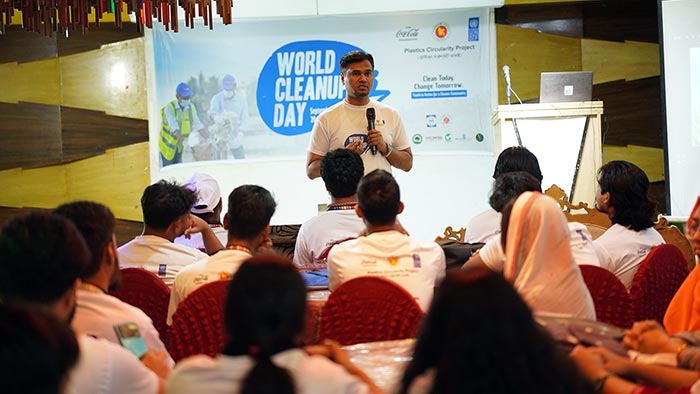
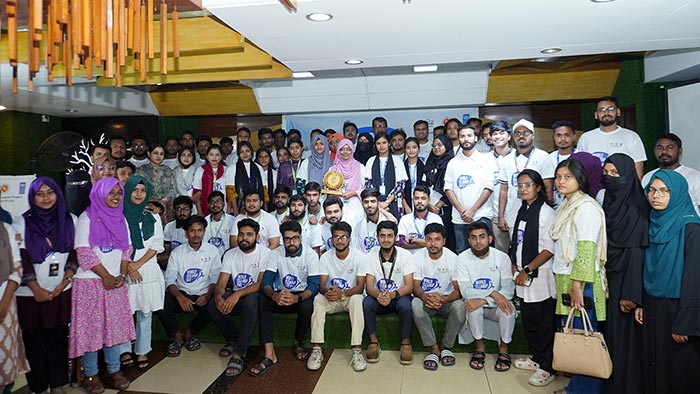
Among the participating organizations, ‘Biodiversity Conservation Club (BCC)’ was declared the World Cleanup Day Champion 2026, in recognition of its strong overall performance, youth engagement and contribution to community-based environmental action. The recognition highlights the important role of young people and volunteer organizations in turning environmental awareness into practical action.
The initiative has contributed to strengthening youth leadership in environmental action, encouraging responsible plastic waste disposal, increasing community participation, promoting practical circular solutions and strengthening collaboration among youth groups, communities, businesses and local stakeholders.
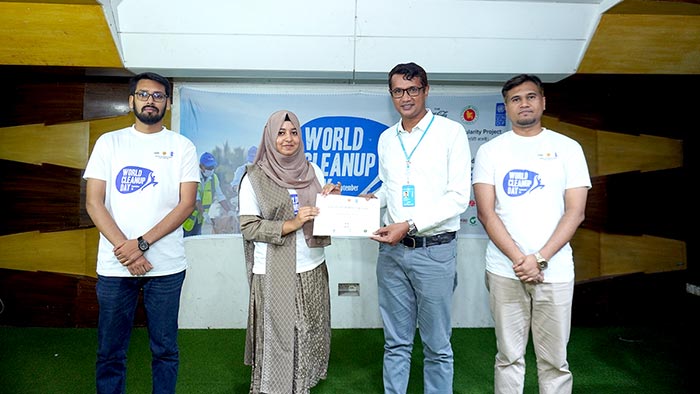
World Cleanup Day 2026 emphasized that cleanup should not end with the event. The initiative aims to leave behind cleaner places, changed behavior, stronger community commitment and practical actions that can continue beyond 20 September.